The night rating
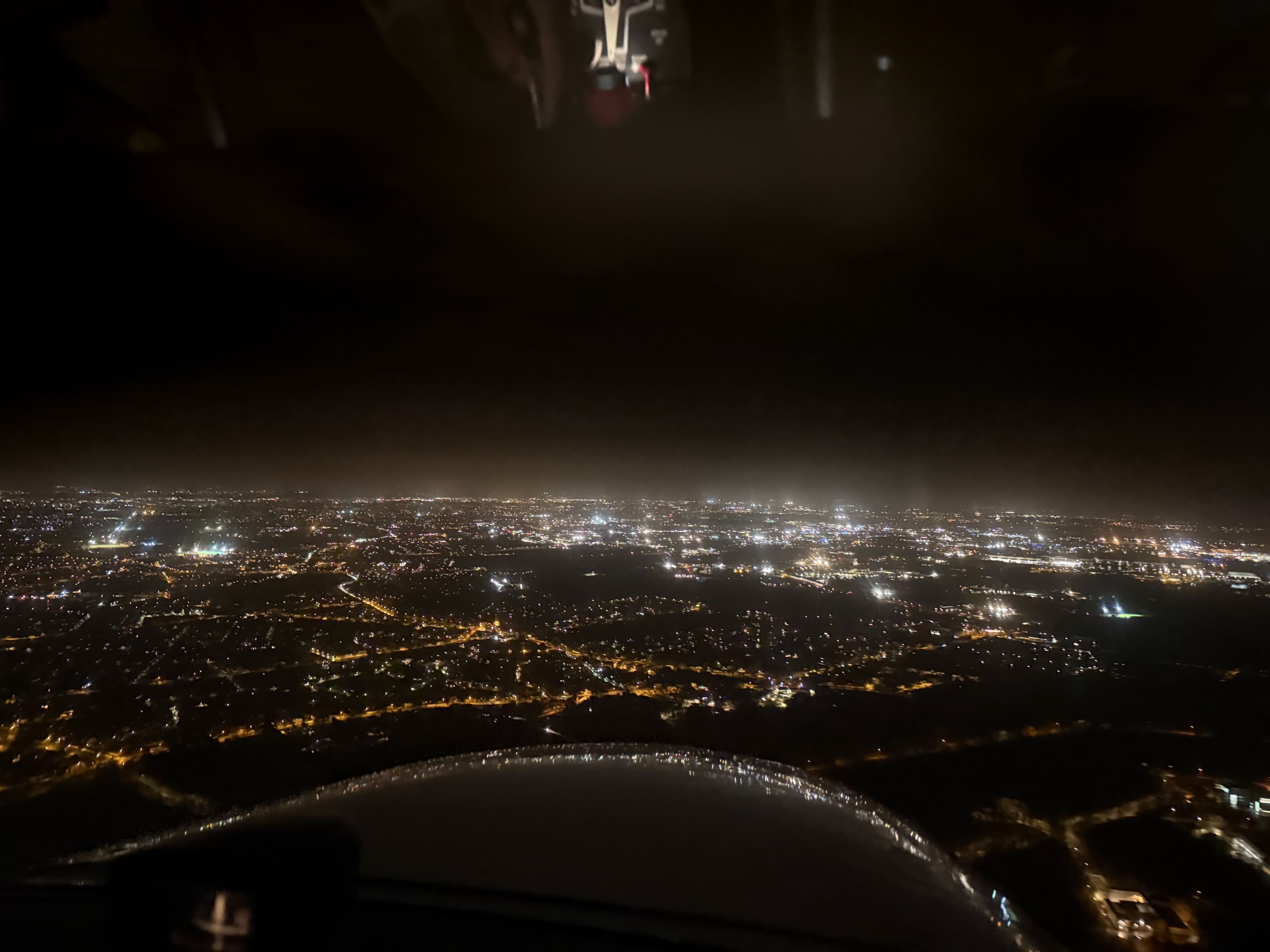
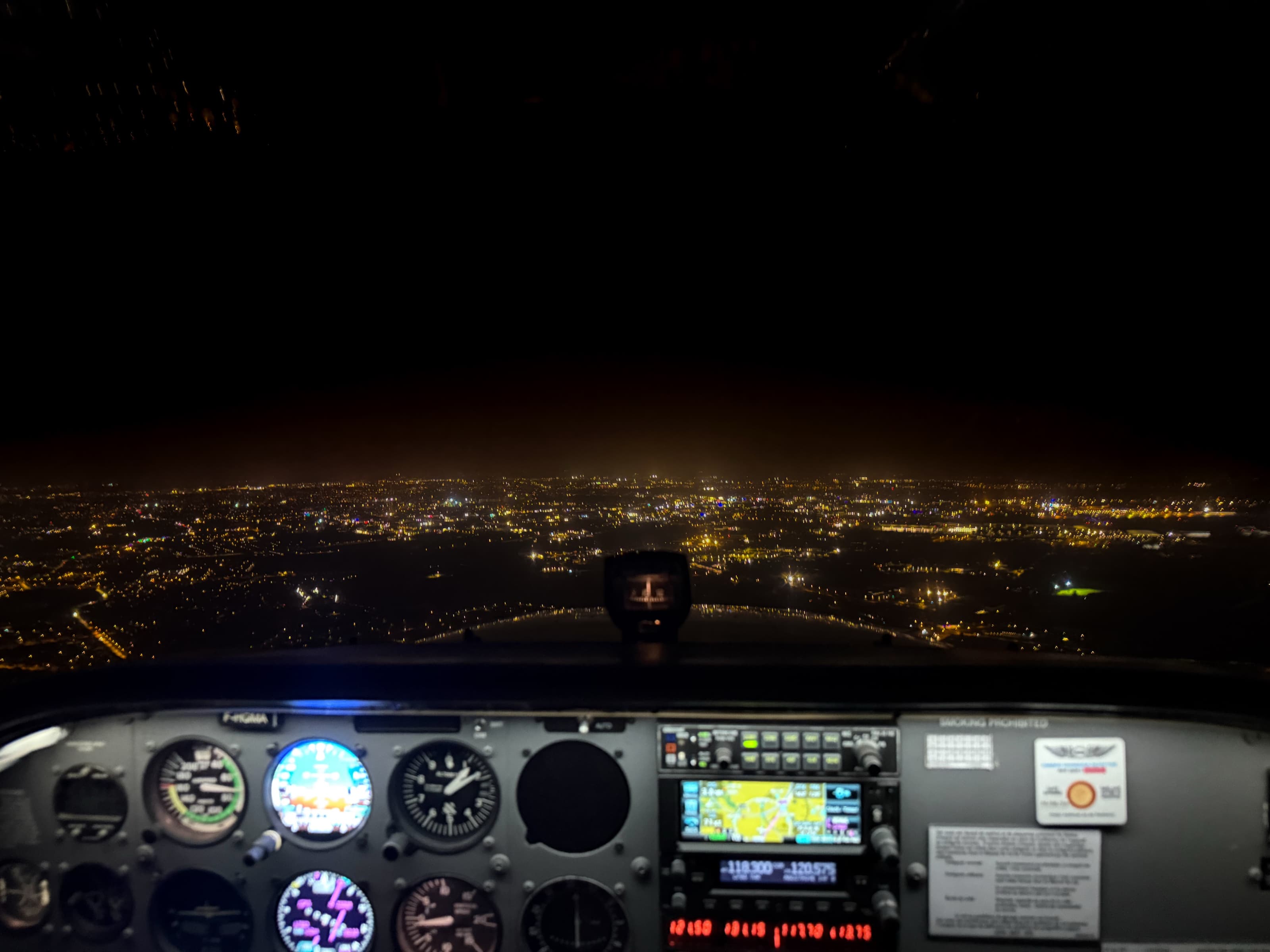
The sky is a different place once the sun has gone. The night rating (FCL.810) extends your VFR privileges into aeronautical night: a short course, with no exam, taught to the syllabus of the French aeronautical federation.
0h
Night flying minimum (EASA)
0h
Full syllabus flown at the club (FFA)
0
Written or practical exams
0
Solo takeoffs and landings
What you need before you start
License
A PPL(A) with a valid SEP rating is enough. With a current LAPL(A), you must also have completed the basic instrument flight training first.
Medical certificate
A valid medical (LAPL, class 2 or class 1) is required.
Validity
Good news: this rating does not expire. Once it is on your license, there is nothing to revalidate.
The shape of the training
A course within the club (DTO)
The rating is earned by completing a course at our training organization, within six months (FCL.810). If you hold a LAPL(A), the basic instrument flight training required for the PPL must have been completed beforehand.
Ground instruction
Night flying calls for different references: the rules specific to aeronautical night, the physiology of night vision, sensory illusions, flight preparation and choosing airfields usable at night.
Night flying — 8 hours minimum
EASA requires at least 5 hours at night, including 3 hours of dual instruction and one hour of cross-country of at least 50 km (27 NM). At the BYAC we follow the fuller federation syllabus, which raises that baseline to 8 hours.
Solo flying
Five takeoffs and five full-stop landings
Issue of the rating
No exam at this stage: the club certifies your training and the authority adds the rating straight onto your license. You are then cleared to fly VFR at night.
What the rating gives you
No longer racing the sun
You can legally return from a cross-country after sunset, make the most of short winter days, and discover flying over lit cities — an experience of its own.
Carrying passengers at night
One regulatory condition: one night takeoff and one night landing in the previous 90 days.
Building toward more
Night flying is required for the commercial pilot license (CPL), and is already a first taste of instrument flying (BIR, IR).
Fancy flying at night?
Contact the office: we will plan your course with one of our instructors, usually spread over a few weeks.
This page is based on European EASA rules (the Aircrew Regulation — Part-FCL, point FCL.810), on the arrangements published by the French civil aviation authority, and on the practical syllabus of the French aeronautical federation as applied at the club. These texts change: the conditions in force at EASA (easa.europa.eu) and the DGAC (ecologie.gouv.fr) are the ones that count.